3D portrait sculpture shaped by likeness, anatomy, and close-up conviction.
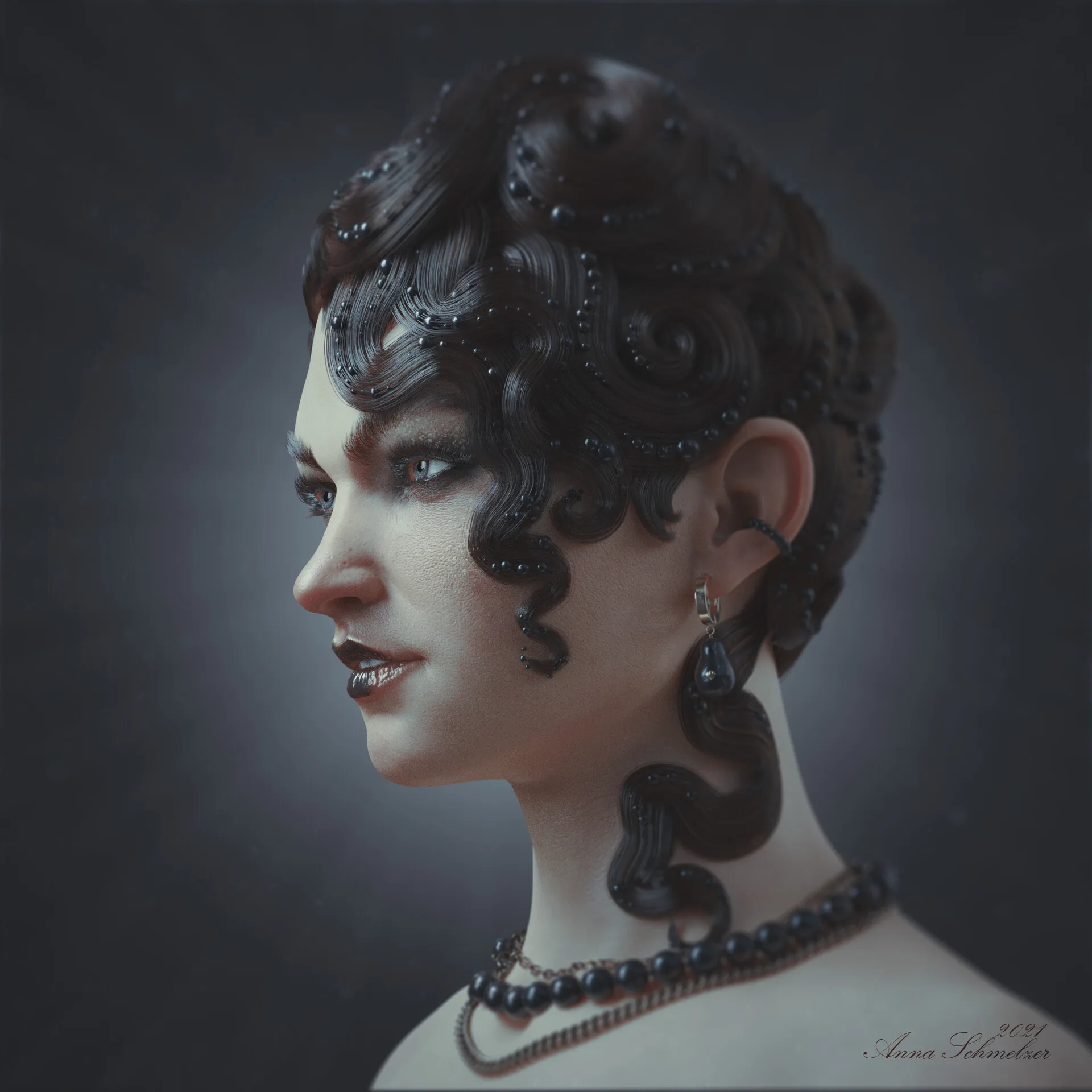
Portrait sculpture for personal commissions, editorial work and likeness studies. A portrait is unforgiving — get the skull wrong by a few millimetres and everyone can tell, even if they cannot say why. Portrait with Waves and Frankenstein are where you can see how close I work.
Best fit
Personal portrait commissions, editorial sculpts, likeness studies of real people or existing characters, and presentation pieces where the face has to be both recognisable and worth looking at.
Where I earn my fee
Generative tools lose a likeness the moment you look closely. What I bring is skull structure you could measure, pore-level surface control, and lighting chosen to carry a mood rather than flatten it.
Work you can review
Portrait with Flowers and Portrait with Waves are my two strongest portraits — a hand-sculpted botanical crown on one, award-winning wave hair on the other. Frankenstein is the clearest test of photoreal facial anatomy. Audrey Hepburn, Escheresque and the Radcat portraits fill in the range.
Have a look at these
A few projects that show this kind of work better than I can describe it.
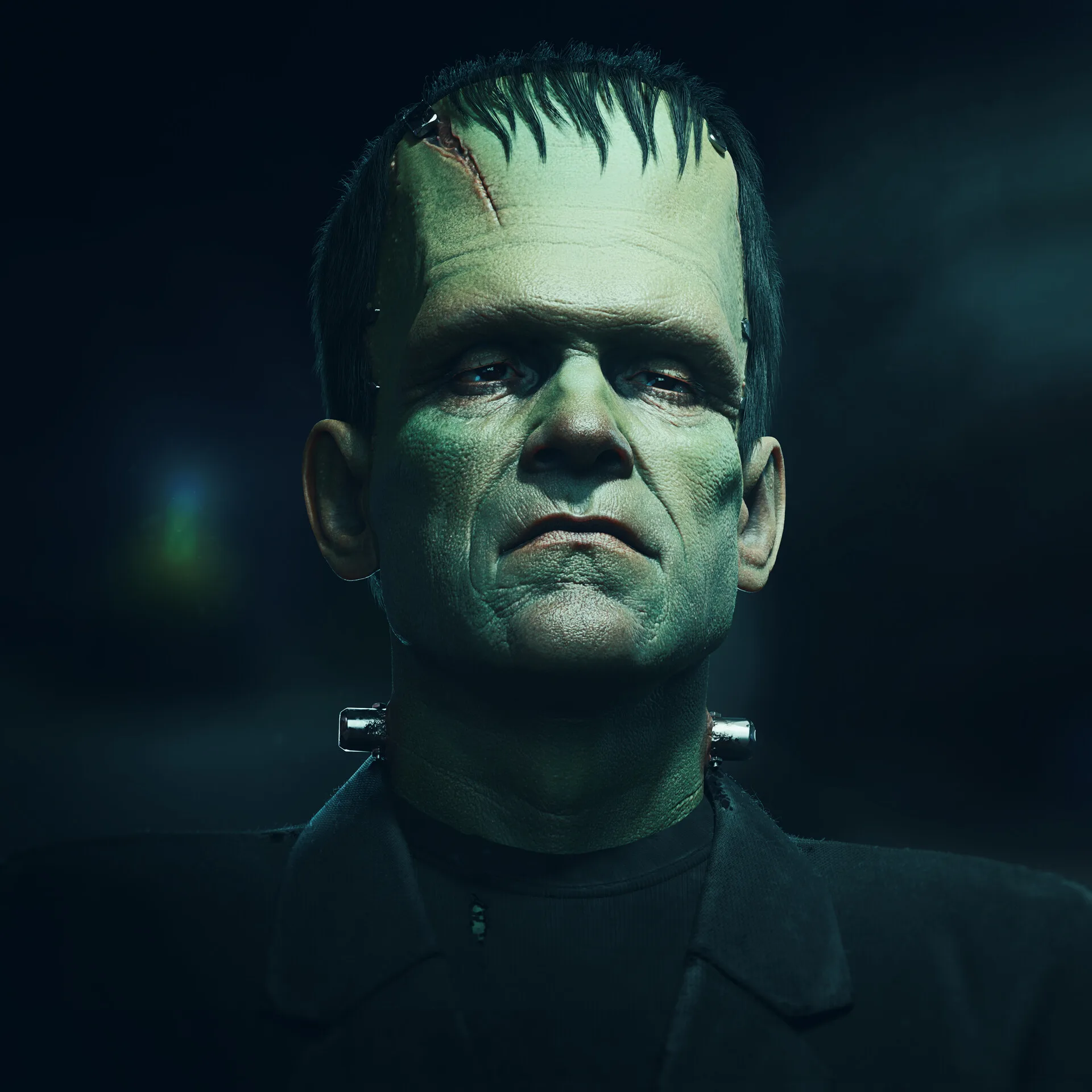
Frankenstein's Monster
Skull structure, likeness and skin control at the distance a portrait actually gets looked at. This is the piece I point to when someone asks how close I can work.
View project page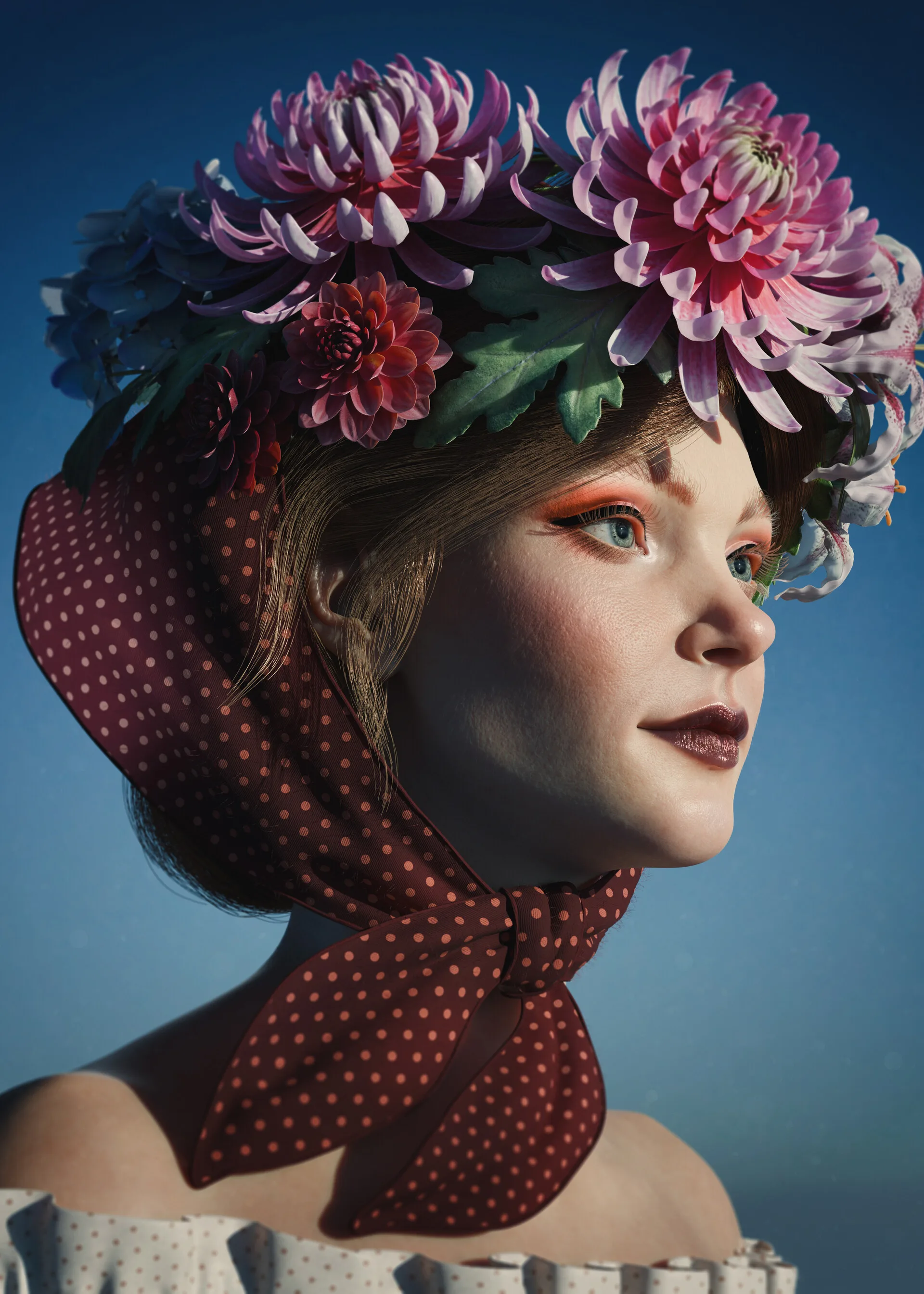
Portrait with Flowers
A hyperrealistic ZBrush portrait under a crown of chrysanthemums, dahlias and hydrangeas — each flower sculpted petal by petal, with the same anatomical care as the face. Rendered in Blender Cycles.
View project page Portrait with Waves
ZBrush Top Row 2021 and CG Society Hall of Fame. The wave hair is sculpted geometry rather than simulation, which is why the silhouette does exactly what I wanted. Multi-layer SSS skin in Blender Cycles.
View project page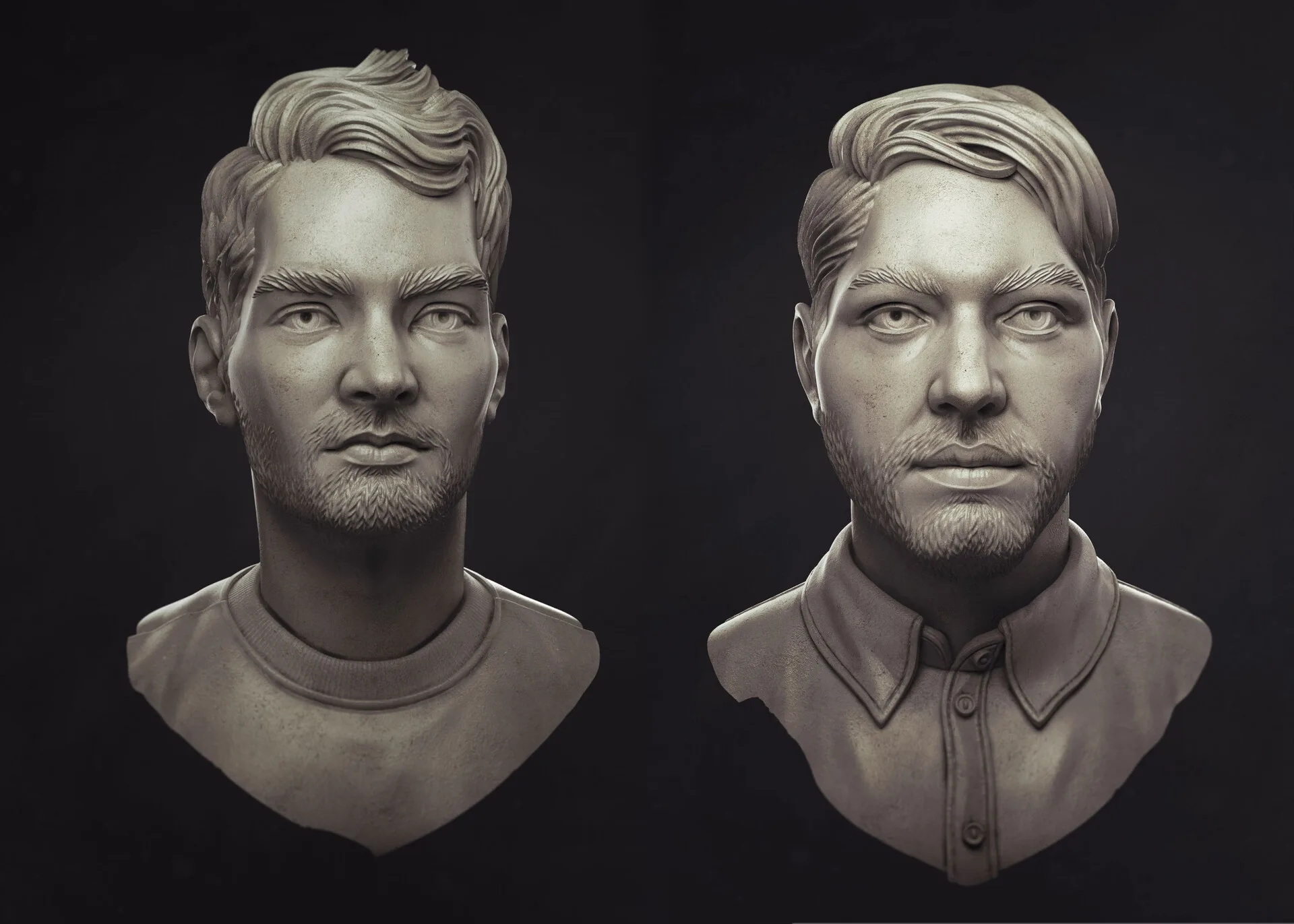
Radcat Studio Portraits
Portraits of the Radcat Design team, built in ZBrush from photo reference across front, 45°, 60° and profile. Not scans — actual sculpts, which is why they read both as sculpture and as the people.
Open Radcat